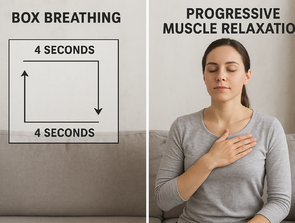
 Psychological relief can be achieved through a variety of relaxation techniques that help reduce tension and anxiety both physically and mentally. One effective method is box breathing, a deep breathing exercise that guides the individual through a cycle of slow, controlled breaths visualized as the four sides of a box. This technique helps manage stress before, during, and after difficult situations by fostering a sense of calm and focus. Another widely used practice is Progressive Muscle Relaxation (PMR), which involves tensing and then relaxing different muscle groups sequentially, diminishing the physical symptoms of anxiety and promoting a deeper overall sense of relaxation.
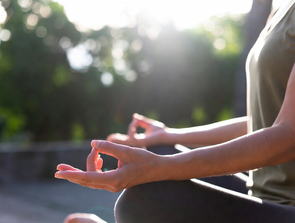
Additional simple yet powerful strategies can also aid in psychological relief, especially during moments of acute stress. Quick measures such as closing your eyes for a brief pause, squeezing a stress ball, or massaging your hands or feet can interrupt cycles of mounting tension and provide immediate calm. Meditation, even for as little as five minutes, has been shown to significantly alleviate feelings of stress and depression by encouraging mindfulness and present-moment awareness. Techniques like these can be easily incorporated into daily routines, requiring no special equipment or environment to be effective.
Incorporating these psychological relief methods into your life can vastly improve your emotional resilience and overall well-being. By regularly practicing breathing exercises, muscle relaxation, or brief meditative breaks, you empower yourself to better manage stress and anxiety. This proactive approach not only enhances mental clarity and emotional stability but may also reduce physical symptoms related to chronic stress, such as muscle tension and heightened heart rate. Consequently, learning and applying these techniques fosters a healthier mind-body connection, enabling you to navigate daily challenges with greater calm and focus.